
Cremation or Burial
Almost
everything
That is how much of a funeral stays the same either way. Cremation is a method of preparation, not a smaller service. A viewing, a full service, military honors, a place at the cemetery, a marker with a name on it, resting beside your spouse: every one of those is still yours if you choose cremation.
Section 1
What Is the Same
Almost everything a funeral involves is still available to you
Cremation is a method of preparation. It isn't a smaller funeral, and it doesn't rule out a single thing listed below. In nearly every respect that matters to a family, you give up nothing by choosing it.
A viewing
You can have one. The preparation is the same, and a casket can be rented for the purpose. Cremation happens afterward.
A full service
Chapel or graveside, religious or not, with the same music, readings, eulogies, and reception. Nothing about the service changes.
Military honors
The flag, the honor detail, and Taps are all available. Cremation affects none of a veteran’s entitlements.
A place at the cemetery
Cremated remains can be buried or placed here in several ways, with a permanent marker and a place for family to visit.
A marker with a name on it
Granite or bronze, with the same choice of stone, engraving, portraits, and inscriptions available for a burial.
Resting beside your spouse
An urn can share a ground space or a crypt with a casket, so a couple who choose differently can still be laid to rest together.
The one thing timing changes
A burial usually takes place within a few weeks, so there is a window to work within. Cremation has no outer limit at all, which means a family can hold the service whenever suits them, next month or next spring, once relatives can travel and everyone can be present.
That flexibility is genuinely useful, and it carries one risk. A date that is never set is a service that never happens, and the family loses the gathering that would have helped them most. If you choose cremation, choose a date too.
Section 2What actually differs
What Actually Differs
Set side by side
| Burial | Cremation | |
|---|---|---|
| Viewing and service | Available | Available, with a rented casket if you wish |
| Timing | Usually within a few weeks | No deadline at all. Whenever the family chooses |
| Cemetery property | A burial space is required | Optional. This is the single largest difference in cost |
| Container | A casket, and an outer burial container | A cremation container, then an urn. An urn vault if buried |
| Where they can rest | A grave, a lawn crypt, or a mausoleum | Six options. See Section 4Six options, shown below |
| Can it be divided | No | Yes. Keepsakes and jewelry let several people hold something |
| Is it reversible | A grave can be disinterred, with permission and cost | No. Cremation cannot be undone |
For the detail behind either column, we have a full Burial Guide and a full Cremation Guide. This page is only for choosing between them.
Section 3The cost difference, honestly
The Cost Difference, Honestly
Why cremation is usually less, and when it is not
Cremation is generally the less expensive path. It is worth understanding exactly why, because the reason is not what most people assume.
It is not that cremation is a lesser service, or that families who choose it are given less care. It is that placement is not required. A burial needs a space, an outer burial container, an opening and closing, and a marker. A cremation needs none of those unless you want them. Remove that whole column and the difference is large.Cremation usually costs less for one reason: placement is not required. A burial needs a space, a container, an opening and closing, and a marker. A cremation needs none of those unless you want them. Choose them anyway and the two land close together, which surprises most families. I will price both on paper so you are comparing real numbers.
Which also means the gap narrows
A cremation with a service, a niche or an urn space, a quality urn, and an inscribed marker is not far off a simple burial. Families are often surprised by this, and it is worth knowing before you assume one path solves a budget problem.
The honest summary: cremation costs less when you choose less. Choose the same things, and the two are closer than you would think.
Whichever way you lean, we will price both for you on paper so you are comparing real numbers rather than impressions. There is no cost to ask and no obligation attached to it.
Section 4Where cremated remains can go
Where Cremated Remains Can GoSix places they can go, not one.
Six places they can rest, and you can divide between themFamilies take the urn home because nobody told them there was anything else.
Cremated remains can rest in six different places here. Families often take the urn home because nobody told them there was anything else, and one survey found that three in ten people were unaware of the memorial options available to them. Here they are.
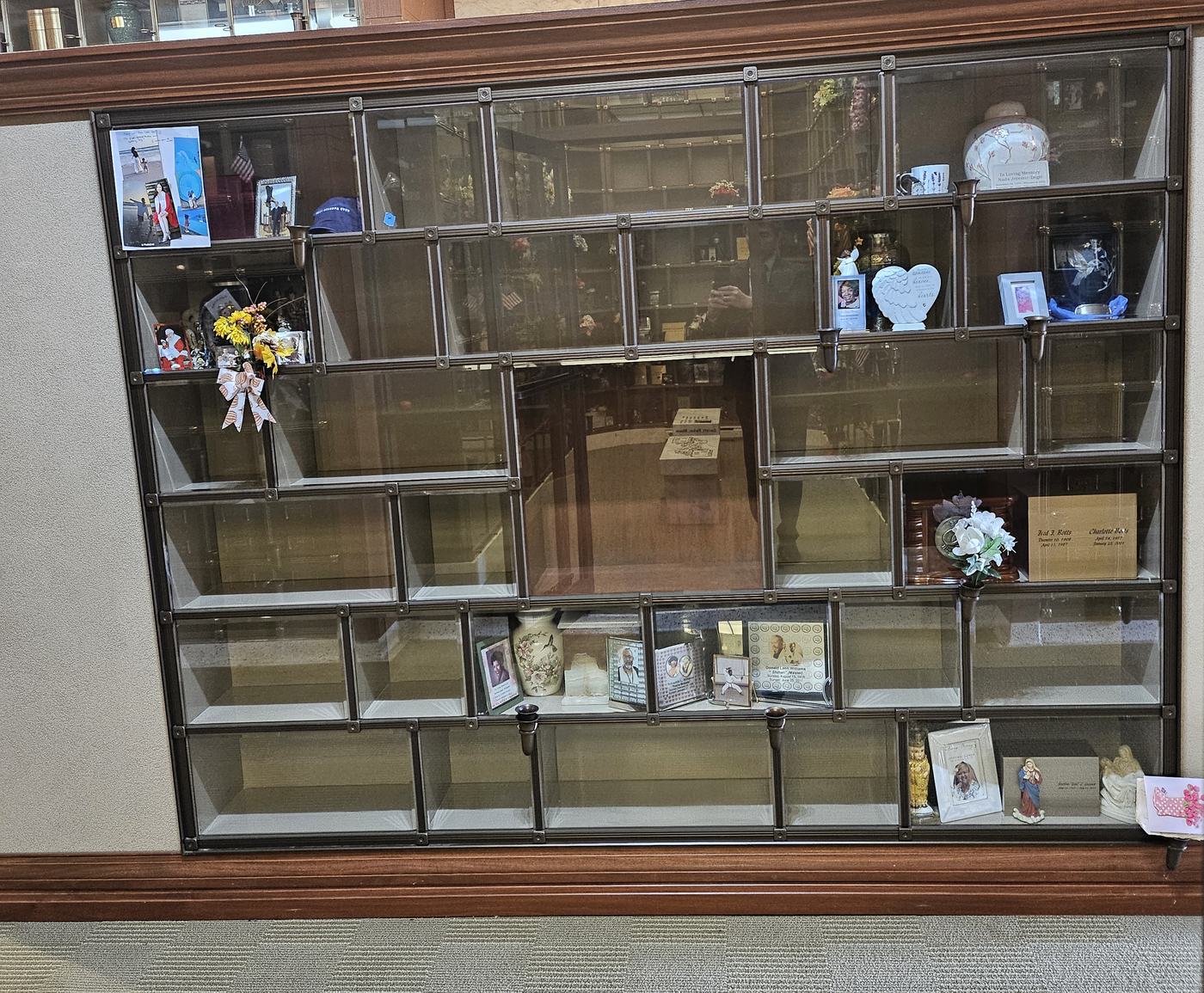
- A columbarium nicheA compartment in a wall or structure, with a granite front or a glass front that lets the urn be seen. Several settings across the parkA compartment in a wall, granite front or glass front. Six settings across the park.
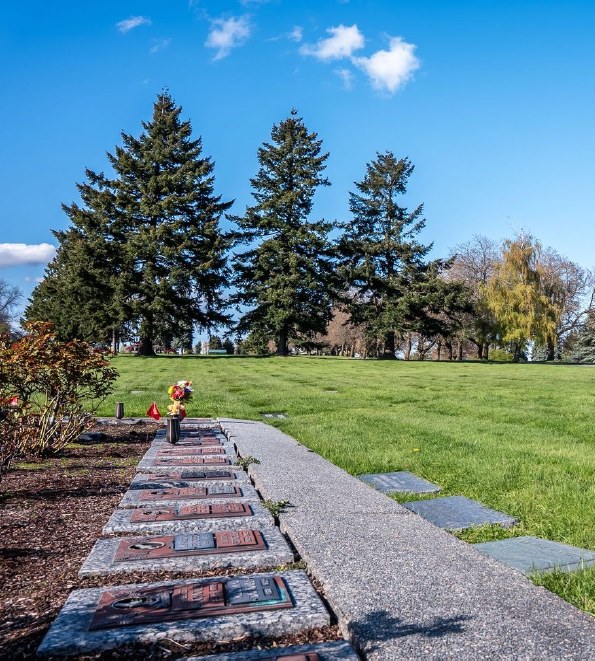
- Buried in an urn gardenGround burial of the urn in a garden set aside for cremated remains, marked in the same way any grave would beGround burial of the urn, marked the same way any grave would be.
- Added to a family spacePlaced with a spouse or parent who is already here. An urn can share a ground space with a casket, or a crypt with onePlaced with a spouse or parent already here. An urn can share a space with a casket.
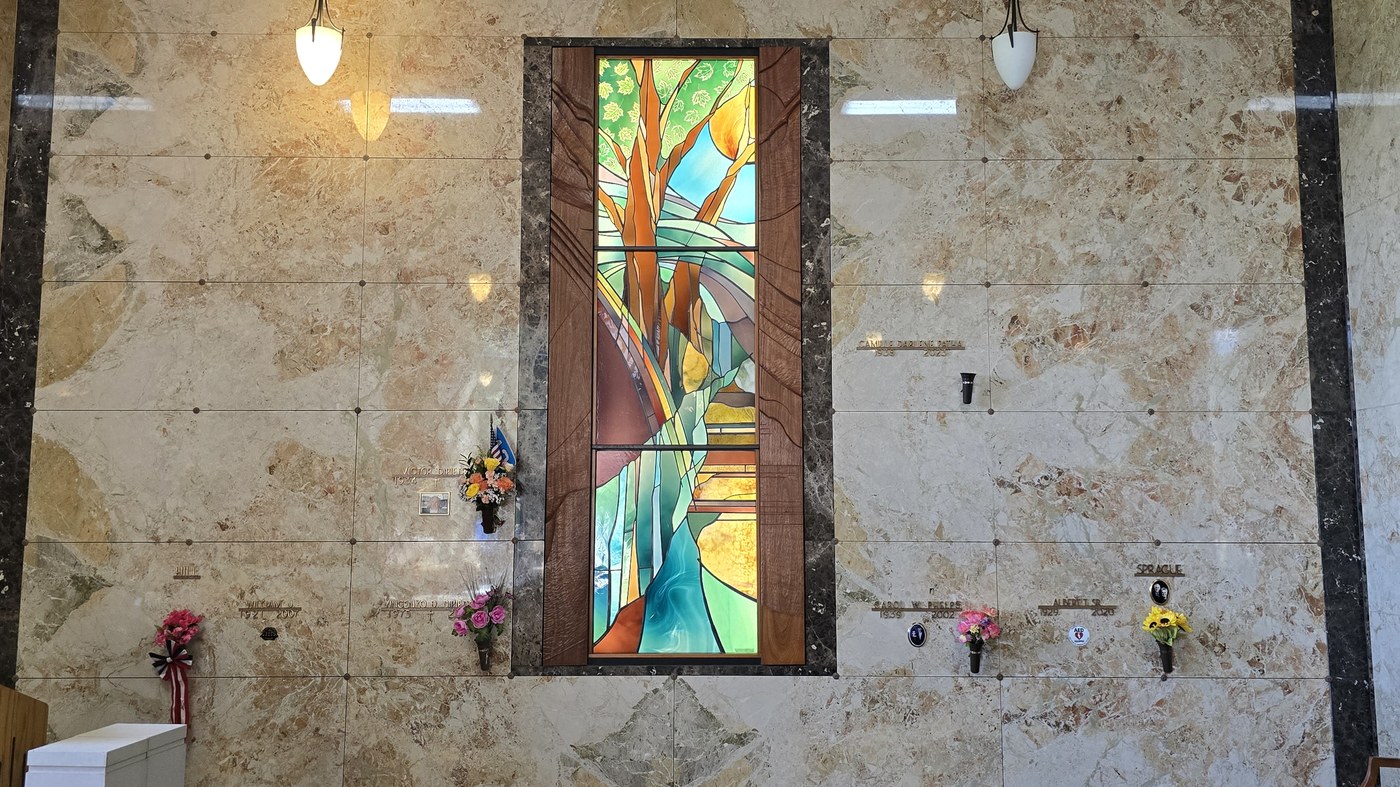
- A mausoleum cryptAbove-ground entombment, for families who prefer not to be in the ground. A crypt can hold an urn on its own, or an urn alongside a casketAbove-ground entombment, for families who would rather not be in the ground.
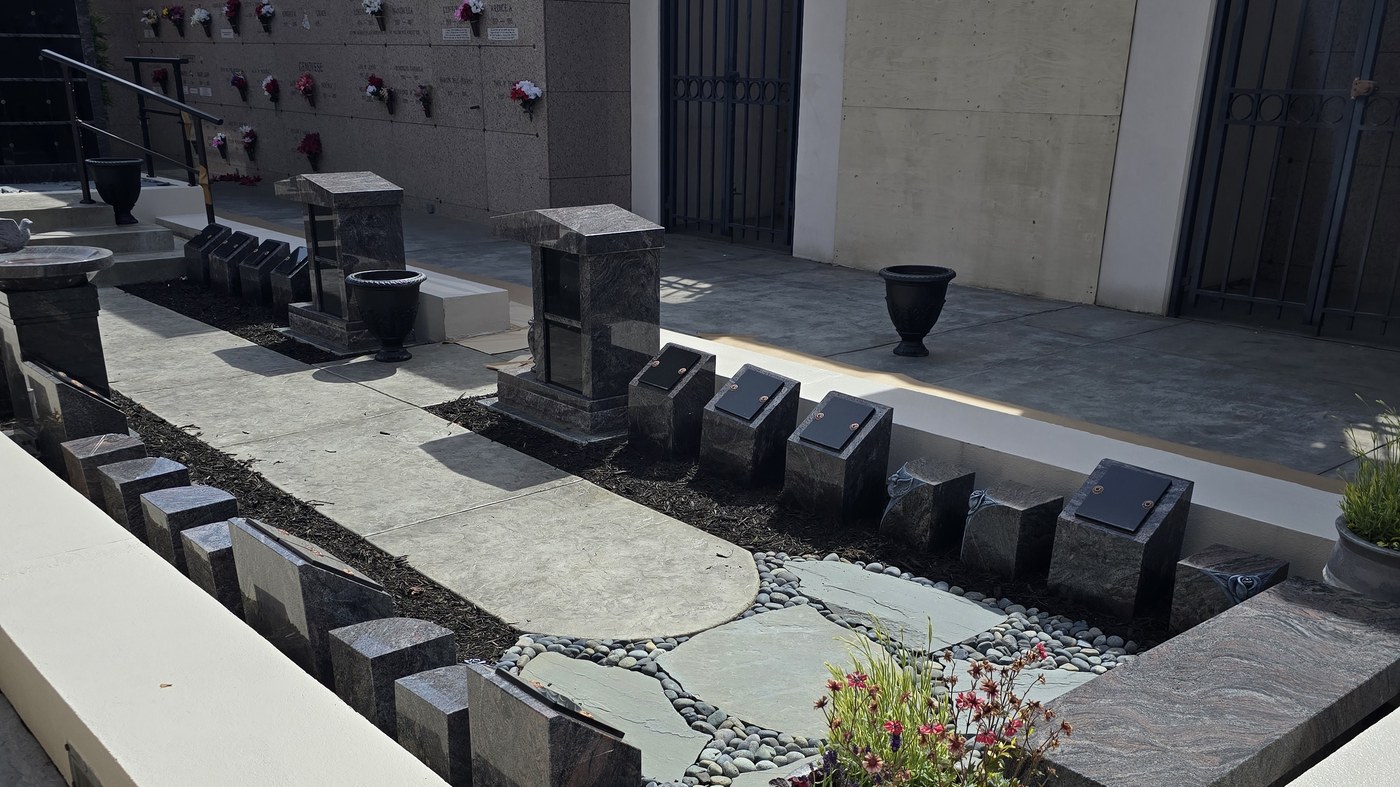
- A scattering gardenScattered in a dedicated setting, with a memorial so there is still a name and a place to come back toScattered here, with a memorial so there is still a name and a place to come back to.
- Kept at homeA legitimate choice, and a common one. Section 6 covers what to think about firstA real choice, and a common one. Say out loud who takes the urn next, and tell them.
Cremated remains can also be divided, so one portion can rest here while another is scattered somewhere that mattered to them, or kept in keepsakes by several members of the family. You are not choosing only one of these.Remains can also be divided, so a portion rests here and a portion is scattered somewhere that mattered. You are not choosing only one of these.
Our Urn Placement Guide and Scattering Garden Guide cover the settings in detail, with photographs.
Why a place matters
A resting place is not for the person who has died. It is findable, so a grandchild not yet born can stand in front of it one day. It belongs to everyone, where an urn in one person's home belongs to that household. It outlasts all of us, because the endowment care fund maintains it in perpetuity. None of that makes keeping an urn at home wrong. It is worth knowing what a permanent place adds, so that keeping the urn is something you chose rather than something that happened.
Section 5
Why a Resting Place Matters
What a permanent place actually does, and for whom
A final resting place is not for the person who has died. It is for everyone who comes after, and it does three things that nothing else quite does.
It is findable
A name, a section, a record kept permanently. A grandchild not yet born can stand in front of it one day without needing anyone’s permission or anyone’s address.
It belongs to everyone
An urn in one person’s home belongs to that household. A place here belongs to the whole family equally, including the relatives who are not close to whoever holds the urn.
It outlasts all of us
It does not depend on anyone remembering, moving carefully, or still being alive. The endowment care fund maintains it in perpetuity.
None of this makes keeping an urn at home wrong. Plenty of families do it and find real comfort in it, particularly in the first year. It is worth knowing what a permanent place adds, so that keeping the urn is something you chose rather than something that happened.
Section 6
The Question Nobody Asks
What happens to the urn after you
If you are keeping a loved one’s ashes at home, or planning for your own to be kept, there is one question worth sitting with. It is rarely asked out loud, and we would rather ask it gently now than have your family meet it unprepared.
Who takes the urn next, and does that person know?
Roughly one in five people keep a loved one’s remains at home, and of those, more than half are holding a parent. Which means the urn on the shelf usually passes to a child, and then eventually to a grandchild who may never have met the person inside it. Homes are sold. Families move across the country. Estates get divided among siblings who do not agree.
The part of this work nobody talks about
About one percent of cremations in this country end with remains that are never collected. That is roughly fifteen thousand people a year. We keep a long-term storage facility here for exactly that reason, and it is not empty.
Almost none of those families intended it. They meant to decide later, and later kept moving. It is not a failure of love. It is what happens when a decision has no deadline and no obvious moment to make it.
So the practical answer is simply this. If the urn is staying at home, say so out loud, write it down, and tell the person who will one day be responsible for it. And if you would rather your family not carry that decision at all, a place here settles it permanently, in an afternoon, for whoever comes after you.
Either answer is a good one. Having an answer is the thing that matters.
Section 7Three things families ask
Common Questions
What families ask us most about this choice
If we choose cremation, can we still have a viewing?
Yes. The preparation is the same as for a burial, and a casket can be rented for the viewing rather than purchased. The cremation takes place afterward. Many families do exactly this.
Does our faith allow cremation?
It depends on the tradition, and the honest answer is that we are not the right people to decide it for you. Some faiths require burial, some permit cremation with conditions about how the remains are treated, and some have no view at all. Speak with your clergy. If it would help, we are glad to be part of that conversation.
Do we have to buy cemetery property if we choose cremation?
No. That is the main reason cremation usually costs less. But not being required is different from not being worth it, and Sections 4 and 5 are there so the choice is an informed one rather than a default.No. That is the main reason cremation usually costs less. But not being required is different from not being worth it, which is what the six settings above are there for.
Can my spouse and I be together if one of us is cremated?
Yes. An urn can share a ground space with a casket, or be placed in a crypt alongside one, so a couple who choose differently can still rest in the same place. It is a common arrangement and considerably less expensive than two separate spaces.
Can the ashes be divided among the family?
Yes, and many families do. A portion can rest here while another is scattered somewhere meaningful, with keepsake urns or jewelry for those who want to hold something. Choosing a resting place does not mean choosing only one thing.
If we scatter, is there still somewhere to visit?
There can be. Scattering in a dedicated garden here comes with a memorial carrying the name, so there is a permanent place to return to. Scattering privately somewhere meaningful leaves no marker and no record, which some families are at peace with and others come to regret.
You do not have to choose between them. Many families scatter a portion in the place that mattered and keep a portion here, so there is somewhere for everyone else to visit.
Can we scatter somewhere that mattered to them?
Very often, yes, and it is one of the most common things families do. Washington does not restrict where cremated remains may be kept or scattered, and a family member with the legal right to control the disposition does not need a permit.
What is needed is permission from whoever controls the place. Private land needs the owner’s consent. National parks go through the chief park ranger, and state trust uplands through the Department of Natural Resources. Public navigable waters, including Puget Sound, rivers, streams, and lakes, are open to it. Beyond the mean lower low water mark, federal burial-at-sea rules apply. City and county parks set their own rules, so ask first.
One instruction the state is firm about: scatter the contents only, never the urn itself.
We have had an urn at home for years. Is it too late?
Not at all, and you would be in good company. Families come to us with urns they have kept for ten or twenty years, often after a move or a death in the family made the question urgent. There is no time limit and nothing to explain.
Which do you think we should choose?
That is genuinely not ours to say. We serve as many families choosing one as the other, and we do not think either is better. What we do care about is that it is a decision rather than an assumption, and that whichever you choose, there is a plan for where they will rest.
Talk it through with someone
No decision is needed in the room. We will lay both out, price them side by side, and you can take as long as you need.
Schedule a conversation Browse all guidesOr reach Martice Morrison directly at 206-277-5417 or mmorrison@bonneywatson.com
No decision is needed in the room
I will lay both out and price them side by side, so you are comparing real numbers rather than impressions. There is no cost to ask and nothing attached to it. Take as long as you need afterward.
Martice Morrison · (206) 445-9794 · mmorrison@bonneywatson.com
